
 Inspection and Testing
[ BCL Containers ]
Shipping Container Toilets
Shipping container toilets offer a portable, durable, and long-term sanitation solution for a variety of purposes and industries.
They are often used on building sites, outside pubs/restaurants, for events such as festivals or concerts, and much more. This allows you to meet health and safety standards without complex building works and approval.
BCL containers offer bespoke shipping container toilet builds suited to any size/dimension needs, just get in touch today to get started.
What is a shipping container toilet block?
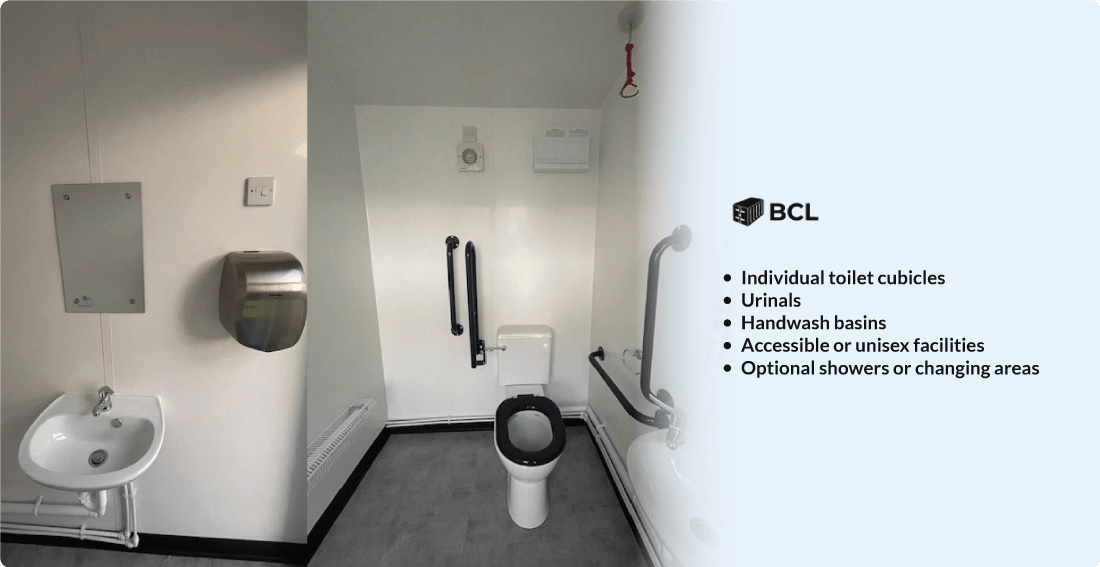
A shipping container toilet block is a standard ISO shipping container that you convert into a fully functioning toilet facility. You receive a self-contained unit designed for temporary or even permanent use on sites where fixed buildings are not practical.
You can install these units on construction sites, at events, on campsites, outside pubs, or in remote locations. They arrive pre-assembled and ready to position, then you connect them to water, drainage, and power where required.
Container toilet blocks can include multiple facilities within a single container, such as:
Individual toilet cubicles
Urinals
Handwash basins
Accessible or unisex facilities
Optional showers or changing areas
With BCL, you can design a shipping container to suit your exact intended purpose and needs, no problem.
What industries use container toilet blocks?
Container toilets/toilet blocks are highly beneficial across a range of industries and locations. These include (but are not limited to):
- Construction sites - rely on them to meet health and safety standards. You can connect units to mains waste or pair them with effluent tanks, which makes them practical for phased developments and remote builds.
- Events and festivals - use container toilet blocks for secure, high-capacity facilities. Steel construction helps reduce vandalism, and separate gents and ladies sections support better crowd management.
- Remote and industrial locations - often depend on these units. If you operate in marine environments, energy sites, or infrastructure projects, you can position units at ground level or stack them to save space.
- Sports clubs, campsites, and public venues - install them as seasonal or permanent amenities. You can specify layouts that include accessible cubicles, showers, or changing areas where required.
- Pubs - often position container toilets in larger beer gardens as a semi-permanent alternative to portaloos.
Container toilet blocks vs portable toilets
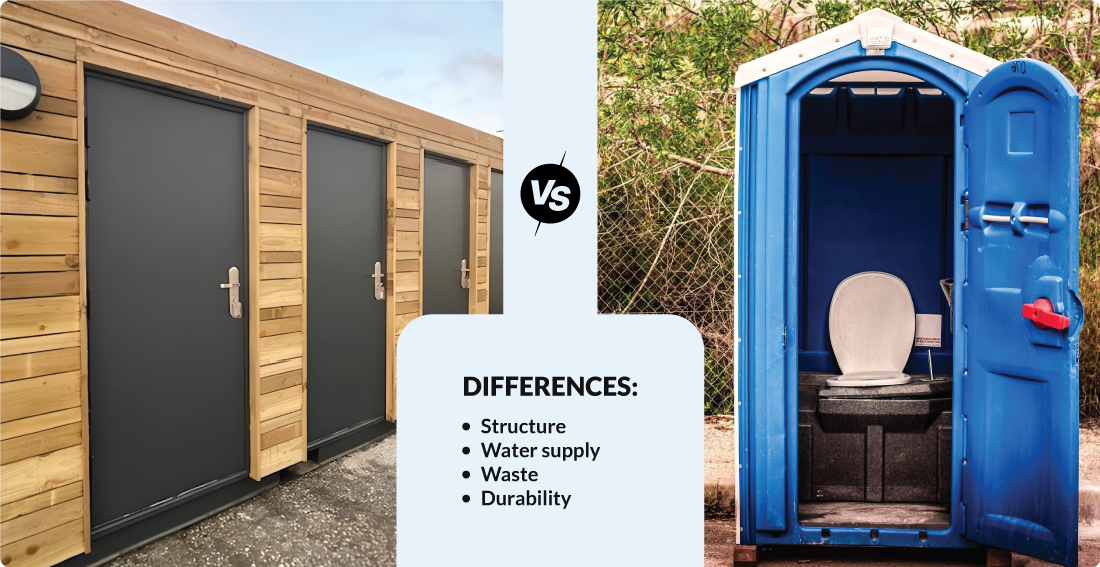
When you choose between a container toilet block and a standard plastic portable toilet, you decide on durability, comfort, and long-term value.
Container toilet blocks serve semi-permanent or fixed locations such as construction sites, campsites, and visitor attractions. You connect most units to mains water and drainage, which allows for flushing toilets and handwashing facilities with running water.
Key differences:
Structure - Container toilets have a strong steel frame compared to a flimsier moulded plastic on portable toilets.
Water supply - Container toilets are usually mains-connected, but can use self-contained septic tanks. Portable toilets are limited almost always solely to small self-contained tanks.
Waste - As above, container toilet blocks can choose between mains drainage or a waste tank for convenience. With portable toilets, you’re always limited to a chemical waste tank.
Durability - Steel container toilets are highly resistant to damage and vandalism, whilst plastic portable toilets are much more prone to wear and impact damage.
You gain better insulation, lighting, and ventilation with container units. Many blocks include multiple cubicles, urinals, sinks, and accessible options in one secure structure.
Plastic units rely on chemical tanks and regular servicing. Container blocks can also use waste tanks where mains drainage is not available, giving you more flexibility on remote sites.
If you need a longer-term solution with higher user comfort and stronger construction, a container toilet block gives you greater control over layout and presentation.
Toilet block containers with BCL
For bespoke toilet block containers, BCL containers are experienced with delivering a variety of sizes and designs, suitable for construction sites, events, festivals, and more.
We’ll take your requirements into consideration before discussing and deciding on the right solution for your project. Our expert technicians will then get to work in order to deliver a fully-fitted container toilet block ready for use.
Shipping container toilet FAQs
Do container toilet blocks need planning permission?
Whether or not container toilet blocks need planning permission depends on your intended use and location. Temporary placements on construction sites or farms generally fall under ‘permitted development,’ meaning no permission is required. However, permanent or semi-permanent installations at venues might need planning permission.
Our team can advise regarding the planning permission needed.
How many toilets can fit in a 20ft container?
A standard 20ft container can comfortably fit between 2-4 WC cubicles alongside hand wash basins depending on the layout. A 40ft container can fit considerably more, as well as multiple containers fused together.
We’ll work with you on the internal layout during the design stage to make the most of the available space.
Can you combine a container toilet and shower block?
Yes. We regularly build combined toilet and shower block conversions within a single container unit, which is a popular option for campsites, sports facilities and construction welfare units. The layout can be configured to include separate male, female and accessible facilities as required. Get in touch to discuss your requirements and we'll put together a proposal.
[ Case Studies ]
Real projects. Proven results.
‘Modular classroom’ gets used as a catch-all term, but it covers more than
When a school needs extra teaching space quickly, cost is usually the first
The Construction (Design and Management) Regulations 2015 are the framework that governs health
If your school needs extra space fast, whether that's for growing pupil numbers,
Turnstiles come in two main formats, and the choice between them has a
The self-storage industry in the UK has grown steadily for over a decade,