
 Inspection and Testing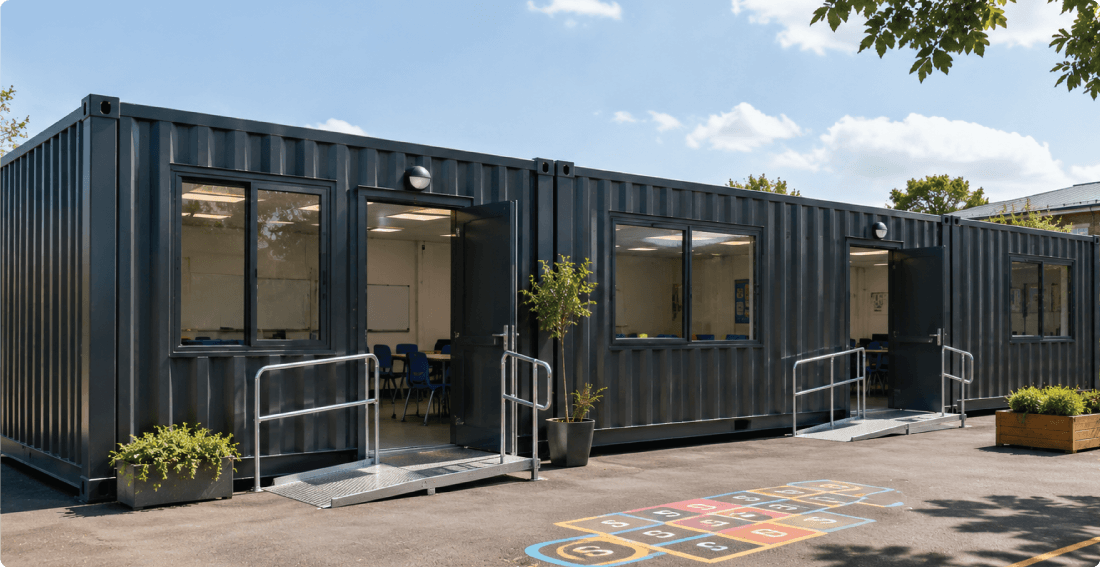

Across England, schools are installing temporary buildings at a pace not seen in years. Some are responding to the RAAC crisis, some are managing rising pupil numbers or ageing buildings, and others simply need extra space faster than a permanent build could ever deliver.
Whatever the reason, more schools are treating temporary classrooms as a genuine long-term answer rather than a short-term stopgap. This piece looks at what's actually driving that shift, how a container classroom compares to portable and modular alternatives, and what to check before choosing a supplier.
What's driving demand for temporary classrooms
Several pressures are pushing schools toward temporary buildings at the same time:
RAAC remediation keeping some schools in temporary space for longer than first expected
Ageing school buildings reaching the point where sections need to come out of use for repair or replacement
Growing or shifting pupil numbers that can't wait for a full building programme
Refurbishment projects that need decant space while permanent buildings are upgraded
None of these pressures are going away quickly, which is why more schools are choosing durable, purpose-built temporary space instead of a short-term fix.
The RAAC crisis is one driver, but not the only one
Reinforced autoclaved aerated concrete (RAAC) remains one of the clearest examples of why schools need temporary space quickly. The Department for Education's own figures show RAAC has been permanently removed from 71 of the 237 confirmed affected schools and colleges so far, with a commitment to make every remaining site RAAC-free by 2029.
Many of the schools still waiting are relying on temporary buildings installed under Class CB, the permitted development right created specifically for RAAC-affected sites, which is due to expire on 24 October 2026 unless a proposed extension to 2028 is confirmed. We've covered the planning rules around this in detail in our guide to planning permission for temporary classrooms, including what Class CB allows and the key dates schools need to be aware of. RAAC is a significant driver of current demand, but it isn't the whole picture, which is why it's worth looking at the wider case for temporary buildings rather than treating this as a RAAC-only decision.
Temporary classrooms vs portable and modular classrooms
Temporary classroom, portable classroom and modular classroom are often used interchangeably, but the construction behind them varies. Traditional portable classrooms are usually lightweight, timber-framed units built for short-term use. Modular classrooms are factory-built in sections and joined on site, offering more design flexibility than a basic portable unit.
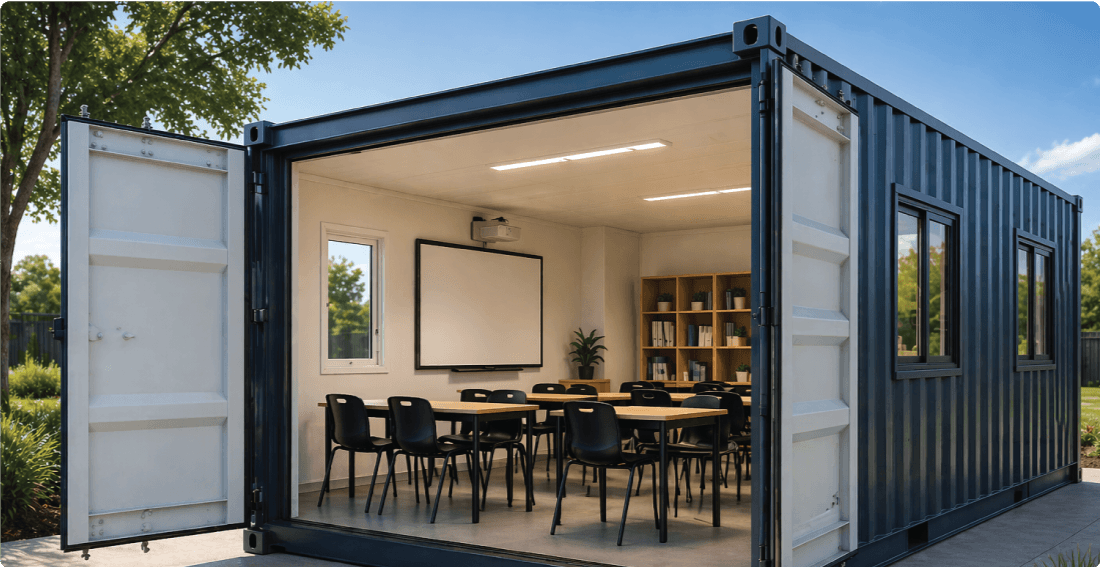
A shipping container classroom sits in the same broad category, a type of temporary, relocatable building, but starts from a stronger base: a steel structural shell already built to withstand transport and stacking. That gives schools a temporary building that can handle a longer working life, tougher day-to-day use and UK weather without the wear that lighter-framed alternatives often show after a few years. Compared with standard portable or modular buildings, a container classroom typically offers stronger construction, easier stacking or joining for larger spaces, and more flexibility to customise the interior to a school's exact needs.
Temporary classroom hire vs buying
Once a school has decided temporary space is the right route, the next question is usually whether to hire or buy. Hire can suit a genuinely short, fixed-term need, such as bridging a single term while other work finishes. For most schools, though, a hired unit still needs to be manufactured off-site and delivered, so there's little speed advantage over buying outright, and hire fees are ongoing rather than a one-off cost.
A purchased container classroom becomes a lasting asset a school can move, adapt or sell on later, rather than a recurring expense with nothing to show for it once the hire period ends. It's worth running the numbers over the length of time you actually expect to need the space before deciding either way.
What to look for in a temporary classroom supplier
Not all temporary buildings are built to the same standard, so it's worth checking a few things before choosing a supplier:
Build quality and structural specification, not just the sales brochure
Independent quality assurance and compliance checks against building regulations
Design flexibility for layout, insulation, accessibility and services
Realistic lead times from order to installation
Aftercare and support once the building is on site
At BCL, every container classroom goes through our own quality assurance checks and is designed to meet the relevant building standards from the outset, rather than leaving compliance as an afterthought.
How BCL can help your school move quickly
Every school's situation is different, whether you're managing a RAAC-affected site, planning ahead for growing numbers, or simply need space faster than a permanent build allows. Our team can talk through what's likely to suit your site, timeline and budget, drawing on our wider shipping container conversions experience across classrooms, offices and training facilities.
Get in touch to discuss your project and get a tailored quotation.