
 Inspection and Testing

One-trip shipping containers are the unsung middle ground of the container market. They are not brand new, but they have been used only once, for a single voyage carrying cargo from the factory to a destination port.
That makes them structurally near-new, far cheaper than a freshly built container, and the default starting point for most quality conversions and certified industrial builds in the UK.
This guide explains what a one-trip container actually is, how it is made, how it compares with used and cargo-worthy units, and the most common ways UK buyers put them to work.
What are one trip containers?
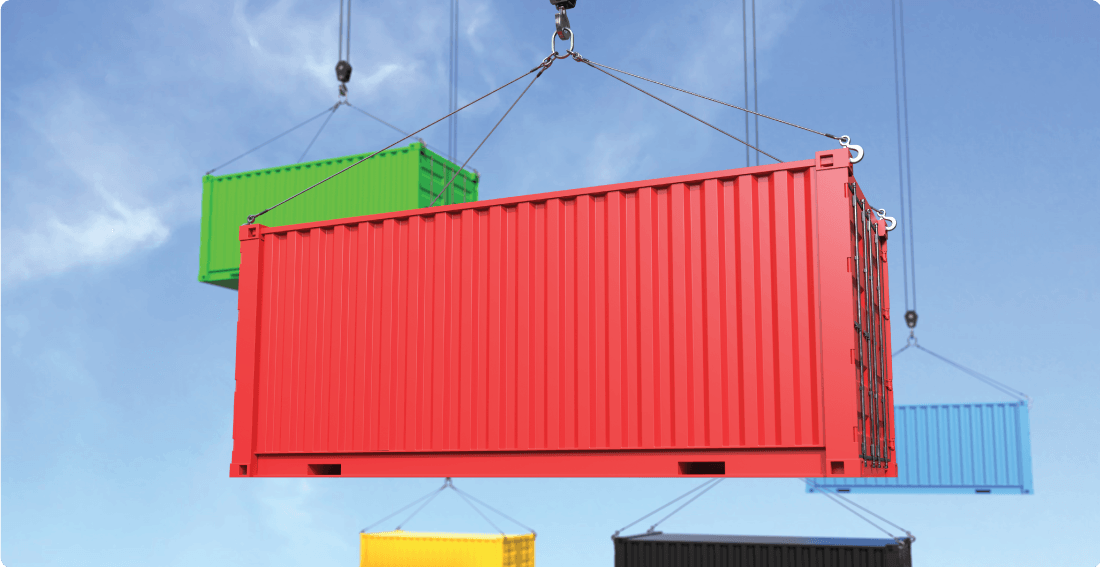
A one-trip shipping container is a brand new container that has been loaded with cargo, shipped on a single international voyage, then sold on at the destination rather than being returned for reuse in global shipping.
You will see them advertised under several names. ‘Single-trip,’ ‘1-trip,’ ‘once-used,’ and even new’ containers all refer to the same thing. Some suppliers list them as ‘new’ because they have only been used to transport one consignment of goods, although a small number of containers really are sold straight off the production line with no cargo journey at all. Either way, the structural condition is essentially indistinguishable from a factory-fresh unit.
In practice, one-trip containers sit between two well-known options. Brand new containers have never been loaded and have no transit history. They are rare in the UK and the most expensive option. Used containers, by contrast, have been shipped many times over several years. They are cheaper but show visible wear, dents and surface rust.
A one-trip container gives you the structural integrity of a new build at a significantly lower price, which is why it is the most popular base unit for conversions and certified new builds.
How one-trip containers are made and why they only travel once
One-trip containers are built in the same factories as standard shipping containers, predominantly in China, with smaller volumes from Korea and Vietnam. They are fabricated from Corten weathering steel, a high-strength alloy that develops a protective surface layer when exposed to the elements, which is exactly why containers can sit outside for decades without rotting through. The corrugated walls, forklift pockets, twist-lock corner castings and cargo doors are all built to the same ISO 6346 specification that governs global container shipping.
So why are these containers only used once? The simple answer is logistics economics. Shipping lines pay for every container journey, including the empty ones, and repositioning an empty container back to its origin port costs roughly the same as shipping a full one. If a UK importer needs containers full of goods, it is often cheaper for a Chinese exporter to fill brand-new containers, ship them with cargo, and sell them at the destination rather than rotate older containers back from Europe to Asia.
A one-trip container therefore typically clocks up a single 30 to 45-day sea voyage, gets unloaded at a UK port, and goes straight onto the second-hand market in near-new condition. The paint is still fresh, the floors are sealed, the doors swing cleanly and the steel is structurally sound.
One-trip vs used vs cargo-worthy shipping containers
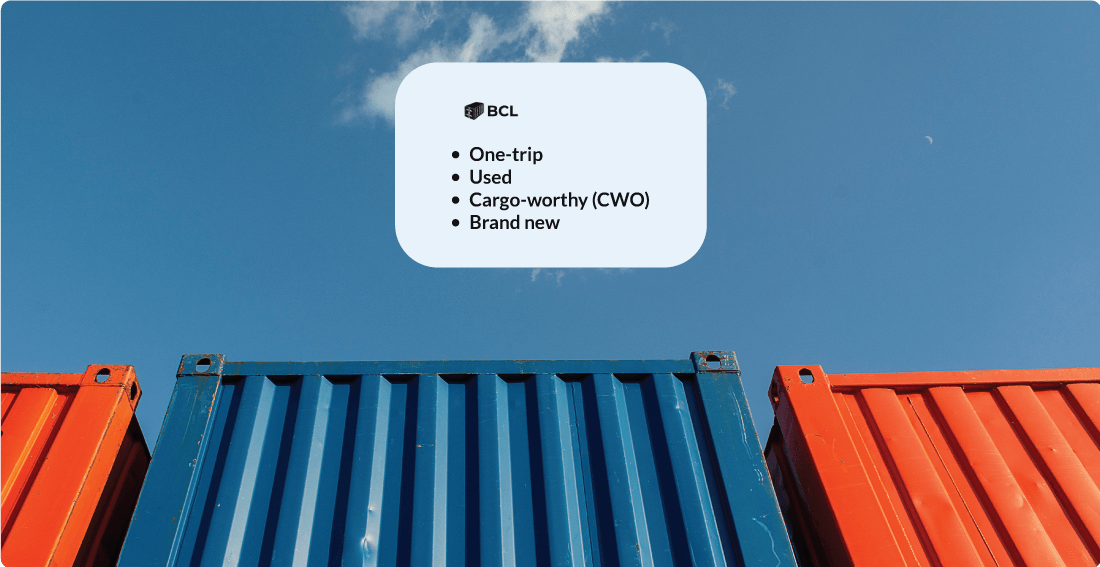
The container market uses a handful of overlapping terms that can be confusing. Here is how they actually differ.
- One-trip - a container that has completed a single international voyage with cargo. The condition is near-new, with minimal wear, and all CSC and ISO markings are current. This is the ideal starting point for conversions, paint finishes and any project where appearance matters.
- Used - A container that has been retired from active shipping after multiple voyages, usually after 10 to 15 years (sometimes labelled ‘wind and watertight’ or ‘WWT’). It will be structurally sound and weatherproof, but with visible dents, surface rust and faded paint. Cheaper to buy, but more prep work is needed before painting or converting.
- Cargo-worthy (CWO) - A certification status, not a condition grade. A cargo-worthy unit has been inspected and signed off as fit for another international shipping journey under CSC (Convention for Safe Containers) rules. Most one-trip containers are cargo-worthy by default. Many used containers are not, and require repairs to regain the certification.
- Brand new - A container that has never been loaded and is sold straight from the factory. Highest price, longest lead time, and rarely needed unless a project genuinely demands an untouched unit, such as some pharmaceutical, defence or food applications.
For most UK buyers, the practical decision is between a used container if budget is the main driver, and a one-trip container if appearance, longevity or conversion-readiness matters more.
A quick note on size: one-trip containers are typically available in all standard sizes (10ft, 20ft, 40ft and 40ft high cube).
Common uses for one-trip shipping containers
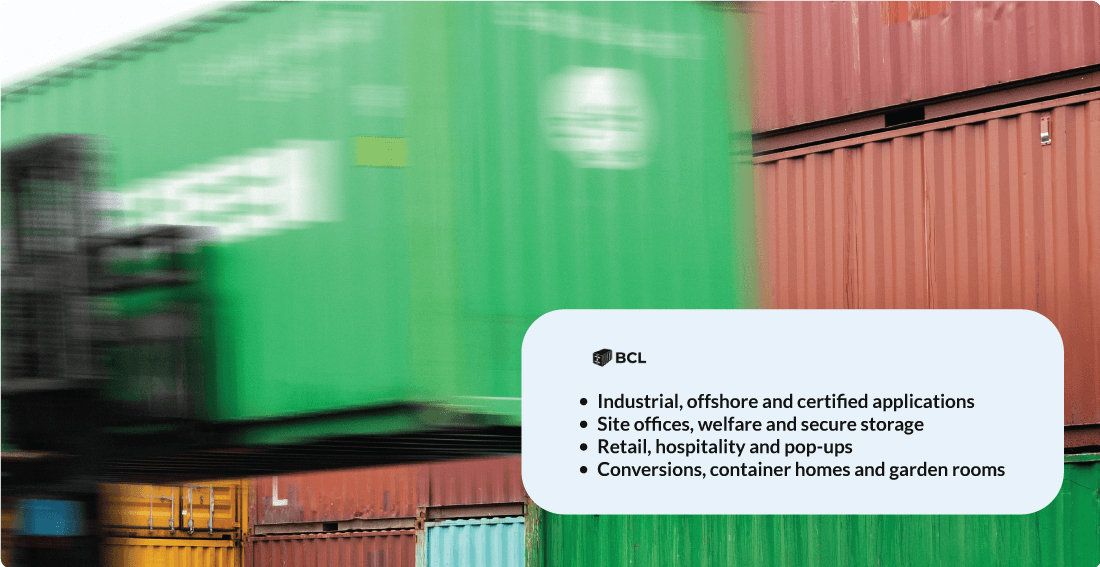
Because they arrive in near-new condition, one-trip containers are the default choice for any application where the container will be visible, modified or certified to a specific standard. Below are the categories we work with most often at BCL.
Industrial, offshore and certified applications
Offshore and industrial work is where one-trip containers earn their reputation. Anything destined for a North Sea platform, a defence site, a nuclear facility or an emergency-services deployment usually has to meet DNV 2.7-1 or Lloyd’s offshore standards, and the inspection regime starts with the base unit.
Used containers rarely pass without significant remediation, whereas one-trip units arrive with all CSC plates, weld certificates and structural integrity intact, ready for shot blasting, painting and fit-out.
Site offices, welfare and secure storage
For construction sites, fabrication yards and any temporary works that need secure, robust and quickly deployable space, one-trip containers strike the right balance between cost and quality.
They make excellent welfare units (toilets, mess rooms, drying rooms), portable site offices and lockable secure stores for plant, tooling and materials. Because the base unit is structurally sound, additional cut-outs for windows, personnel doors, vents and electrical access can be made without compromising the frame.
Retail, hospitality and pop-ups
When a container will be customer-facing, the cosmetic condition of the steel matters as much as the strength.
Pop-up cafés, food trucks, retail units, ticket booths, mobile shops and event bars almost always start with a one-trip container so that the finished build looks crisp, the paintwork is uniform and the corners are square. The clean exterior also makes vinyl wrapping, branding and signage much easier to apply.
Conversions, container homes and garden rooms
The conversion market is where one-trip containers dominate. Whether the project is a garden room, a container gym, a residential build or a multi-unit modular structure, the time saved on prep, repairs and rust treatment usually outweighs the higher unit price. A used container can need days of remedial work before it is ready for insulation and lining. A one-trip unit can often go straight into fit-out, which keeps project timelines short and finished costs predictable.
Get a quote from BCL containers
Every BCL project, whether a single one-trip 20ft unit or a multi-container certified build, is handled in-house, from design and 3D modelling through fabrication, paint and final inspection and testing.
If you are scoping a project and need help working out whether one-trip is the right starting point, or you want a quote on a specific size, finish or conversion spec, get in touch with our team.