
 Inspection and Testing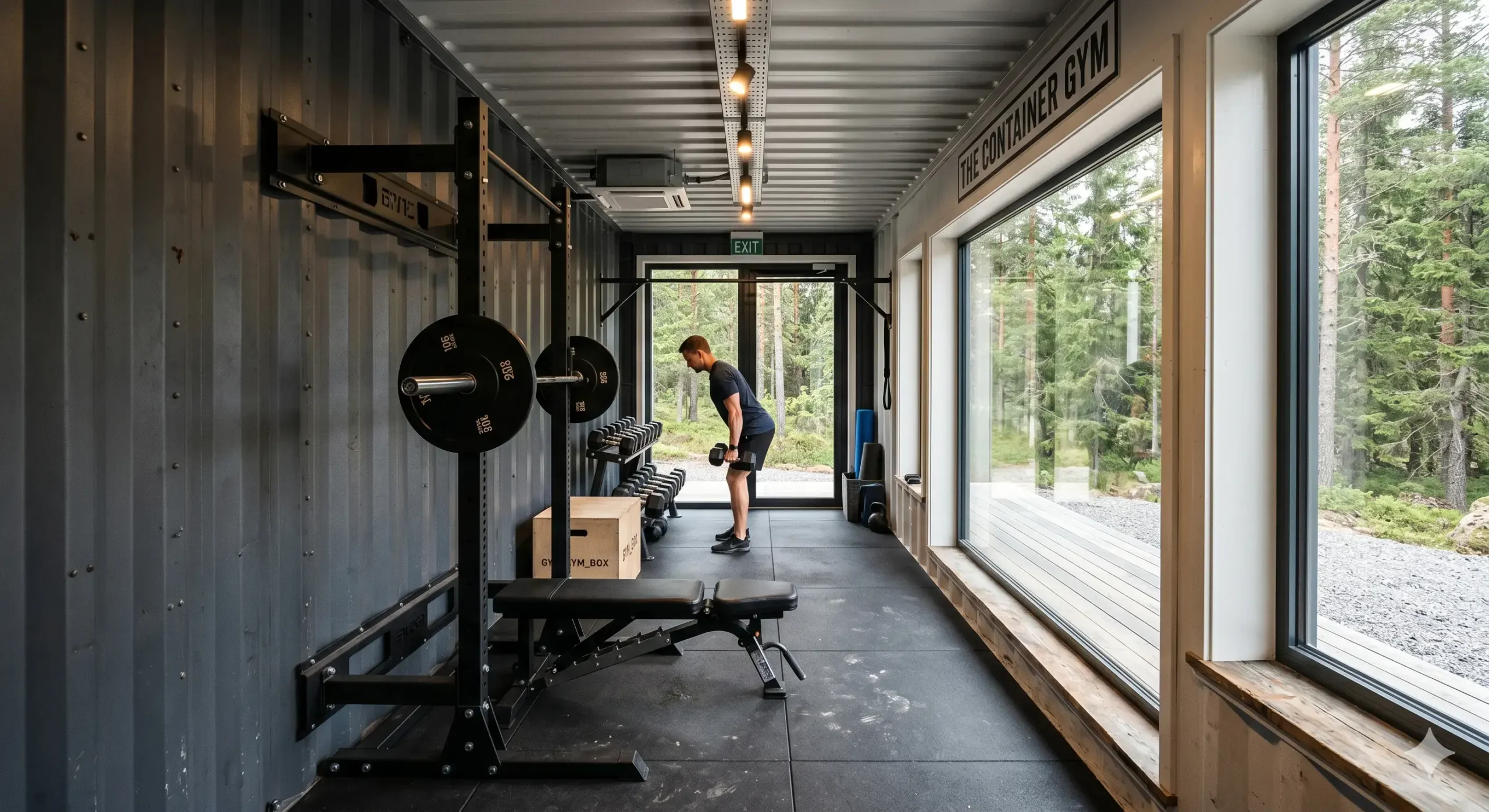

Converting a shipping container into a private gym has become an increasingly practical choice for homeowners, personal trainers, and commercial fitness operators. You get a dedicated, weatherproof training space that can be specified exactly as you need it, without the cost or planning burden of a traditional extension.
Whether you are after a compact home setup or a fully equipped training facility, this guide covers what to expect on cost, size, and lifespan, along with the key ideas that make a container gym genuinely worth using.
What is a shipping container gym?
A shipping container gym is an ISO shipping container that has been structurally modified and fitted out for use as a training space. The container forms the building shell, and everything inside, from the flooring and ventilation through to the electrical supply, is designed around the specific requirements of the brief.
The lifespan of a shipping container gym
One of the less obvious advantages of a container gym is how long it lasts. Corten steel forms a stable oxide layer over time rather than rusting through, and a well-maintained container can remain structurally sound for 25 years or more.
With the right insulation and ventilation spec, the structure holds up well to the heat and humidity that comes with regular training. The steel shell is not affected by what happens inside it, which is more than can be said for timber-framed alternatives where moisture becomes a long-term maintenance problem.
What size can your container gym be?
A 20ft container gives you a usable floor area of around 14 square metres, which is workable for a solo setup with a focused equipment selection. A 40ft container doubles that to roughly 28 square metres and starts to feel like a proper training floor with room to move.
For those who need something beyond standard dimensions, containers can be joined side by side or end to end to significantly increase the available footprint. Custom modifications to height, width, or internal configuration are also possible, so the size of the space does not have to be constrained by what comes off a production line.
The rough cost of a container gym
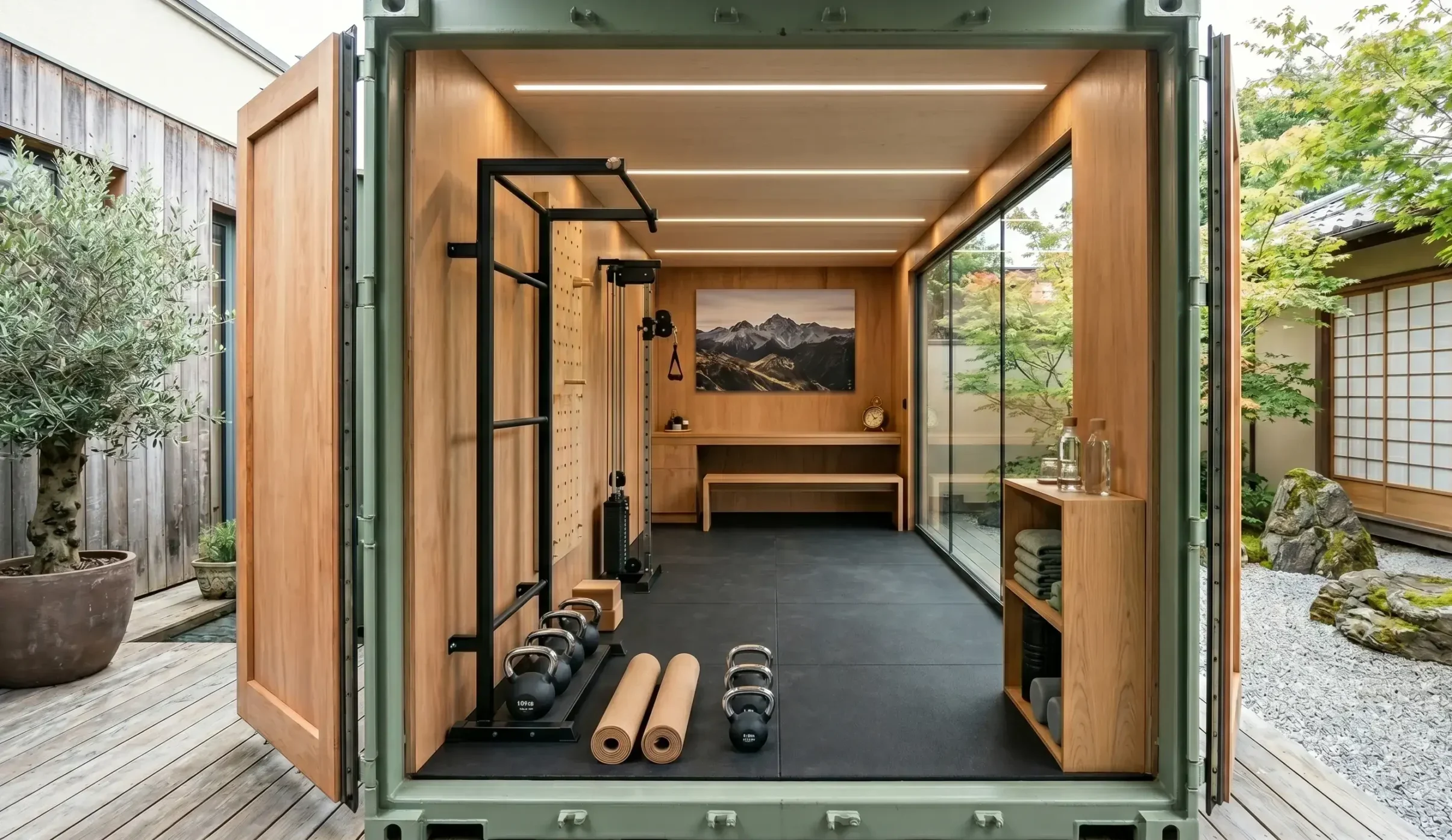
Costs vary based on the size of the container and the level of the fit out. A basic 20ft conversion with insulation, flooring, lighting, and electrical supply will typically start from £5,000, with more complex builds rising accordingly.
The more useful comparison is not the upfront figure but what you get for it over time. A container gym is a permanent, relocatable asset that does not require planning permission in most circumstances under Permitted Development rights, and it does not depreciate the way a fixed construction might if your circumstances change.
Ideas for your container gym conversion
Just because your new gym is made from an old container doesn’t mean it can’t look and feel just as modern and professional as any other workout space. Taking the following points into consideration will help you to ensure a comfortable gym environment which supports your fitness goals.
Ensuring proper airflow
Without adequate ventilation, heat and humidity build up quickly during training use, which affects performance and the long-term condition of your equipment.
Mechanical ventilation with supply and extract points at opposite ends of the container is the most effective setup, with a wall-mounted climate control unit worth considering for more intensive use.
Louvred vents can be incorporated into the walls during fabrication, so it is worth raising this at the design stage rather than retrofitting later.
Optimising equipment layout
Fixed heavy equipment such as squat racks and cable stations should sit toward the ends of the container, where the frame is strongest.
Keeping the central area clear creates a functional zone for movement-based work and means more than one person can train without obstruction. Rubber flooring throughout is the standard choice; it protects the container floor, handles impact, and keeps noise manageable.
Lighting and colour scheme
Roof lights or windows fitted into the container walls are worth considering if the site allows. They reduce reliance on artificial lighting and make the interior feel less enclosed.
For artificial lighting, LED panels provide an even spread without generating excess heat. Lighter wall colours reflect more light and make the space feel larger, though the right choice depends on whether you are building a home gym or a commercial facility.
Wall and floor customisation
Thicker rubber matting absorbs more impact, which matters if you plan to work with heavy weights or perform dynamic movements. Interlocking tiles offer flexibility if you want to reconfigure sections over time. For the walls, a plywood lining or skim coat gives you a clean surface to paint, pad, or finish as required. Mirrors opposite the primary training area are a functional addition for technique work, not just an aesthetic one.
Integrate amenities and extra features
A small changing or storage area partitioned off at one end keeps the training floor clear and is straightforward to incorporate during fabrication. Electrical supply is standard and can support audio systems or screens. Where site conditions allow, a mains water connection opens up the option of a basic washroom within the same footprint, which is particularly relevant for commercial operators.
You may even consider integrating a shipping container sauna alongside your gym.
Your container gym with BCL containers
At BCL Containers, we manage the full conversion process in-house, from initial design through to delivery and installation. Every build is tailored to the specific brief, and our fabrication team has completed container gym projects for both domestic and commercial clients.
You can find more detail on our dedicated shipping container gym page, or take a look at our completed projects to see how previous builds have come together. When you are ready to start planning, get in touch with our team and we will work through the options with you.