
 Inspection and Testing

The self-storage industry in the UK has grown steadily for over a decade, and container-based storage businesses have become one of the most accessible ways to enter the market. Low setup costs, minimal staffing requirements and consistent rental demand make it an attractive proposition, but getting it right requires some planning.
This guide covers everything you need to know to launch a shipping container storage business, from site selection and planning permission to pricing and marketing.
What is a self-storage business?
A self-storage business rents out individual storage units to customers, typically businesses or households, on a short or long-term basis. Customers access their unit directly, usually without staff involvement, making it a low-overhead model once established.
Container-based self-storage replaces traditional brick-and-mortar units with shipping containers. Each converted container becomes a rentable unit, or can be used to subdivide a single container into smaller bays. Because containers are relocatable and require no permanent foundations, they offer far more flexibility than a conventional storage facility.
Is a shipping container storage business profitable?
Yes, when set up correctly. The UK self-storage market has average occupancy rates above 80%, and the container model benefits from low capital expenditure compared to building a traditional facility.
Your profitability depends on location, occupancy rate, how many units you run, and your pricing. A site with 20 x 20ft containers, each renting at £150/month, generates £36,000/year in revenue. Overheads are typically limited to land rent or mortgage, insurance, and basic maintenance: making margins strong once the site reaches capacity.
Choosing a site for your container storage business

Location is the single biggest factor in the success of a container storage business. You need a site that's:
Accessible — easy to reach by van or HGV, ideally close to a main road
Visible — passing traffic and local awareness drives enquiries
Near demand — residential areas, industrial estates and town peripheries all generate consistent storage demand
Large enough — allow space not just for containers but for vehicles to manoeuvre between units
You don't need a prime retail location, but poor access or an obscure site will limit your occupancy. Planning for surfaced ground and adequate lighting from the outset will also save costs later.
How many shipping containers do you need to start?
There's no minimum number of containers to start a self-storage business, but most operators start with 10–20 containers to make the business viable while keeping initial outlay manageable. A mix of sizes, typically 10ft and 20ft units, gives you flexibility to serve both domestic and business customers.
As occupancy grows, adding containers is straightforward, making this a scalable model. View our range of shipping containers for storage to see available sizes and conditions.
Planning permission for a container storage site
Whether you need planning permission depends on your local authority, the nature of the site and how long the containers will be in place. As temporary structures, containers sometimes fall under permitted development, but a commercial storage operation is more likely to require a formal application than a single domestic container.
Key considerations:
Is the land already in commercial use? This can simplify the application
Are you in a designated area such as a National Park or Conservation Area?
How many containers are you placing, and for how long?
We'd always recommend consulting your local planning authority before committing to a site. Getting this wrong early is costly.
How to make your container storage site secure
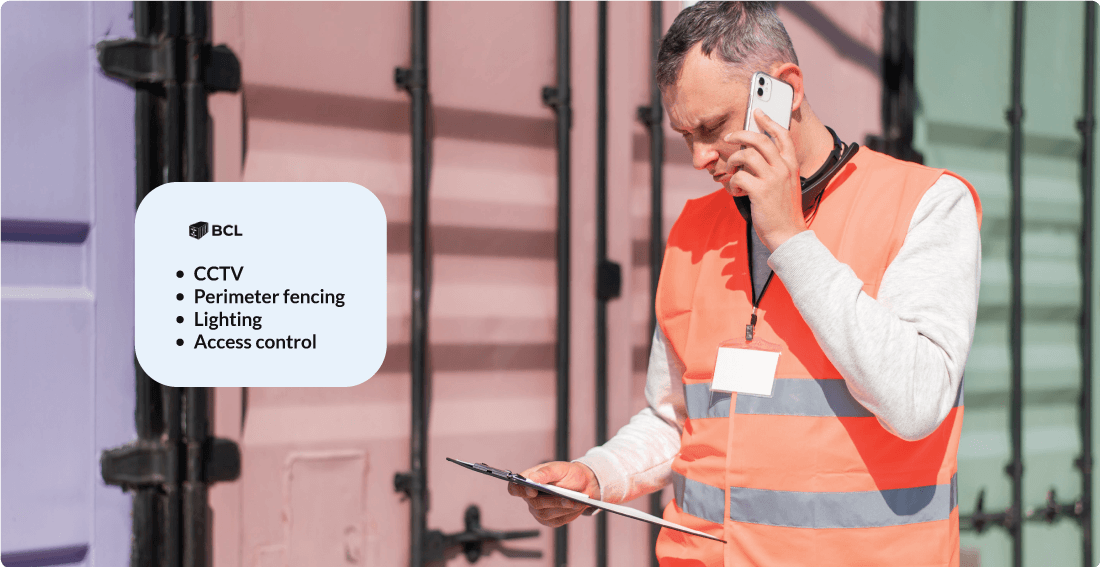
Security is one of the main reasons customers choose container storage over alternatives, so your site needs to back that up.
At the unit level, shipping containers are inherently robust. Steel construction, lockbox fittings and the option for anti-vandal doors make them difficult to break into. But site-level security matters just as much.
Consider:
CCTV — covering all access points and the full container run
Perimeter fencing — to prevent unauthorised access outside opening hours
Lighting — motion-activated lighting deters opportunistic theft
Access control — a shipping container turnstile allows you to manage who enters the site without needing permanent staff on site
Customers will ask about security before signing up. Being able to point to a well-lit, fenced, CCTV-monitored site with controlled access will do more for your conversion rate than almost anything else.
How to price your container storage units
Research what competitors in your area charge per square foot, then price competitively while reflecting the quality of your site and security offering.
As a rough guide, 20ft containers (approximately 160 sq ft) typically rent for £100–£200/month depending on location. Urban and suburban sites command higher rates than rural ones.|
Consider offering:
Monthly rolling contracts to reduce friction for new customers
Discounts for longer commitments to improve occupancy stability
Different pricing tiers for 10ft vs 20ft units
Keep your pricing simple, as complicated tariffs put customers off.
Marketing a container self storage business
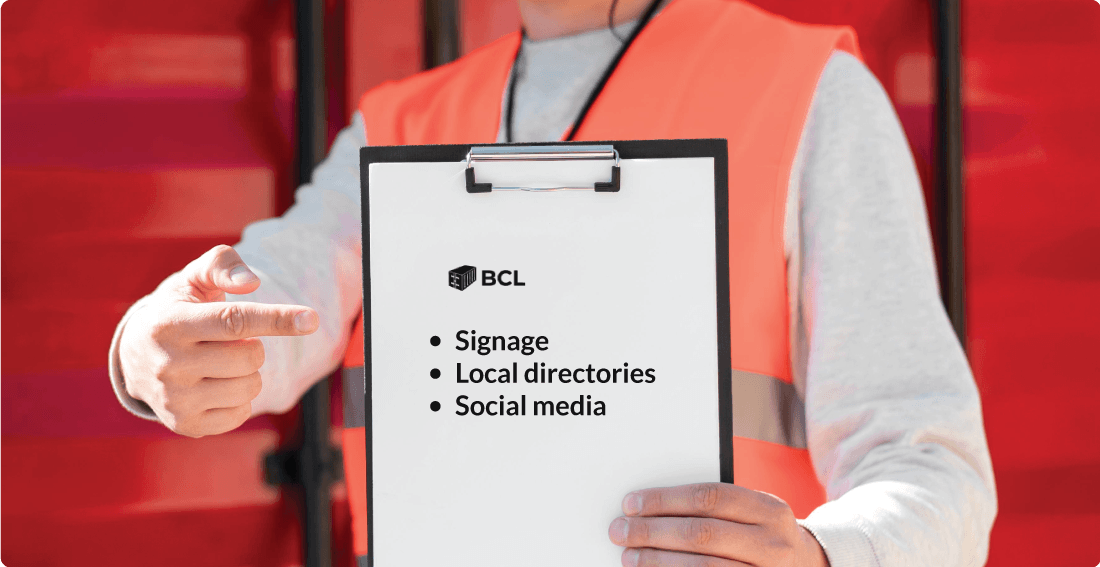
Most storage customers search locally, so local SEO should be your primary channel. Make sure your Google Business Profile is set up and optimised, and target search terms like "container storage near me" and "storage units in [your town]."
Beyond search:
Signage — if your site has road visibility, a clear sign generates ongoing enquiries at zero cost
Local directories — list on storage aggregator sites to capture comparison shoppers
Social media — before and after photos of your site, and videos of the containers, perform well organically
Word of mouth grows quickly in this sector. Tradespeople are a particularly strong referral network, and if you're looking to serve that market further, a shipping container workshop alongside your storage units can make your site a one-stop solution for small trades businesses.
Where to buy shipping containers for your storage business
Buying the right containers at the right price is critical to keeping your setup costs down and your margins healthy. Used, but ‘good-as-new’ containers that have gone through a shot blasting, and refurbishment treatment are wind and watertight, look the part on site, and cost significantly less than new units.
If you need units in pristine condition, BCL also offers new build containers manufactured to order.
BCL Containers supplies new and used storage containers in 10ft, 20ft and 40ft sizes, with delivery direct to your site across the UK. Whether you're starting with five containers or fifty, we can help you plan your initial order and scale from there.