
 Inspection and Testing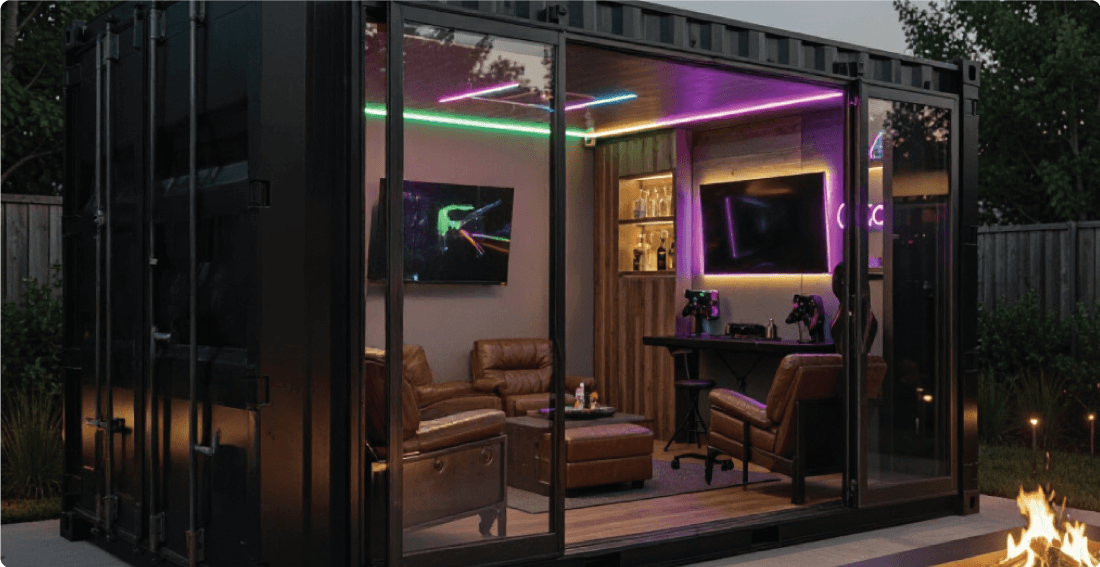

A man cave is one of the most rewarding garden projects you can take on. The catch is that the usual options (a single-storey extension, a high-end garden room, a built-from-scratch shed) come with long lead times and bigger bills than most people expect.
A shipping container conversion sidesteps both. It's faster to build, more affordable than a comparable garden room or extension, and with the right fit-out the finish is every bit as good. This blog post runs through why a shipping container is the ideal man cave solution, how much it’s likely to cost you, how to choose the right container, and a number of ideas for inspiration.
What is a man cave?
A man cave is a private space at home dedicated to relaxing, gaming, watching sport, working on hobbies, or hosting friends.
Some are spare-room conversions or garage builds, but the most flexible option is a standalone garden building. A shipping container man cave sits firmly in that category: a fully customised steel structure dropped into the garden and fitted out exactly the way you want it.
Why a shipping container makes a great man cave

Shipping containers make great man caves because they are built for the ocean, meaning they’re strong, weatherproof, and durable:
Affordable - A converted container is usually cheaper than a comparable garden room or single-storey extension. The shell already exists, the foundations are simpler, and the build typically sits within permitted development.
Quick to install - Once the foundations are ready, the container can be delivered, sited and weatherproofed in a day.
Highly customisable - You can cut in windows, French doors or bi-folds, clad the exterior to soften the industrial look, insulate the walls and fit out the inside in any style. Two or more containers can also be joined to create a larger footprint.
Durable - Corten steel doesn't rot, warp or get eaten by anything. With proper paint protection it'll outlast a timber shed several times over.
Sustainable - Repurposing a used container keeps a serviceable steel structure out of the recycling chain and avoids the embodied carbon of an equivalent new-build.
How Much Does a Shipping Container Man Cave Cost?
The cost of a shipping container man cave can vary dramatically based on scope of the project. Basic conversions may start at around £6,000 - £8,000, whilst a larger fully fitted job could be closer to £12,000 - £20,000.
The biggest cost variables are the size of the container, whether it's new or used, the level of insulation and cladding, how many openings are cut in, and whether plumbing or air conditioning is on the brief.
Choosing the right container size for your man cave
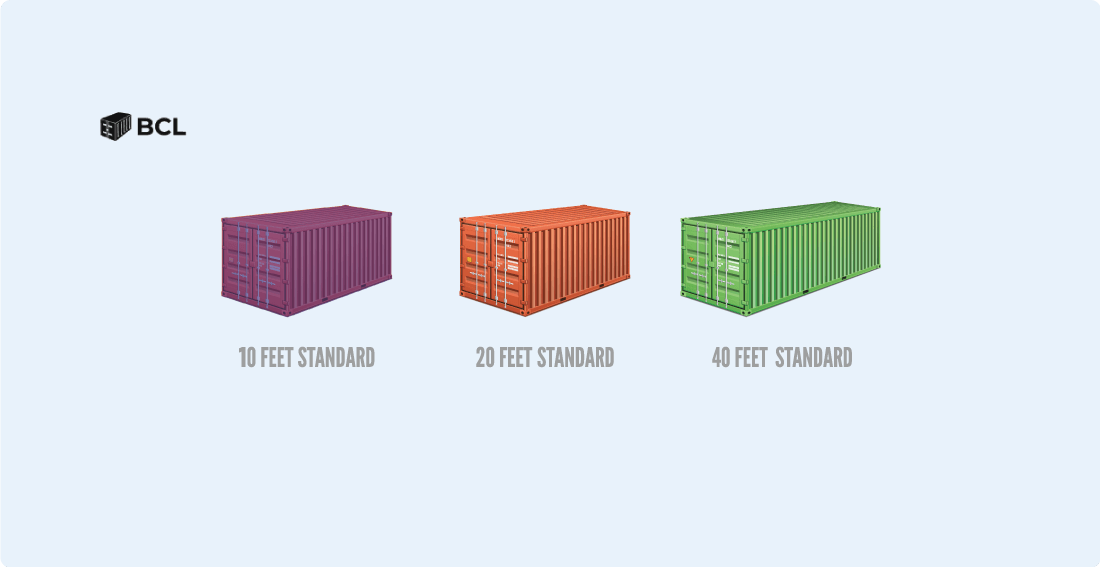
The right size comes down to how you plan to use the space and how much garden you're prepared to give up. As a rough guide:
10ft container: A compact retreat for one or two people. Good for a small bar, reading nook or hobby space.
20ft container: The most popular choice. Enough room for a sofa, TV, bar area and storage without dominating the garden.
40ft container: A serious entertaining space, with room for a cinema, full bar, pool table and lounge area combined.
For a deeper breakdown of the trade-offs between each option, our shipping container sizes guide covers it in detail.
New vs used containers
A new (one-trip) container has minimal wear and a clean shell, which makes it the safer choice for a high-spec build where the exterior is on display.
A used container is more cost-effective and, with shot blasting, repairs and a fresh coat of paint, can finish to the same standard.
How to turn a shipping container into a man cave
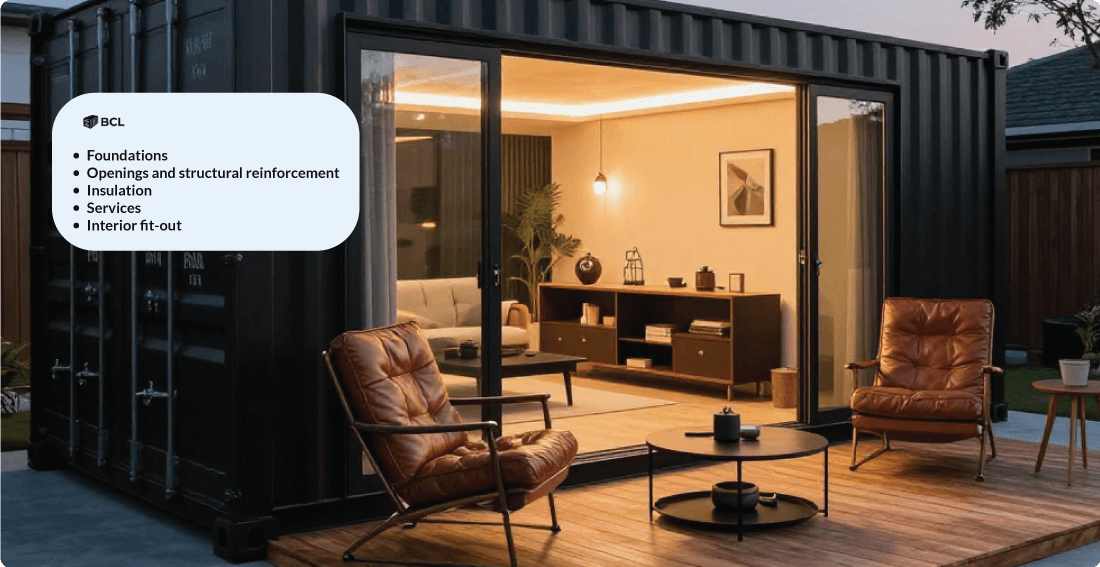
A proper man cave build takes more than dropping a sofa into a steel box. The work falls into roughly five stages.
Foundations - Concrete pads, screw piles or a poured slab. The right choice depends on ground conditions and how much weight the finished build will carry. Foundations must be level and load-bearing, or doors and windows will go out of square as the container settles.
Openings and structural reinforcement - Cutting windows and doors weakens the container's corrugated walls, so steel reinforcement is welded around each new opening before the cuts are made. This is where professional builds pull ahead of DIY attempts, and where in-house fabrication is the difference between a build that lasts and one that warps over its first few winters.
Insulation - The UK climate makes this non-negotiable. Spray foam gives the best thermal performance in a tight space, though rigid PIR boards or rockwool also work well depending on the finish. Don't skip the floor or ceiling.
Services - Electrics, lighting circuits, sockets, network points, heating and any plumbing all go in before the interior is closed up. Most domestic conversions run from a single 32A feed off the house consumer unit.
Interior fit-out - Plasterboard, timber cladding, flooring, bar units, joinery, paintwork. This is where the space stops looking like a container and starts looking like a room.
If you want the layout properly resolved before any steel is cut, BCL's design and 3D modelling service walks through the full plan in advance, covering window placement, internal zoning and finishes, so you can sign off the build with no surprises.
Shipping container man cave design ideas

Once the shell and services are in, the design is yours. A few directions that work especially well in container-sized spaces:
Home bar/pub
A back-garden pub is hard to beat. A 20ft container fits a proper bar counter, a couple of stools, optics or a kegerator, fridge space and seating with room to spare. Industrial pendants, exposed steel and reclaimed timber pair well with the container shell. Panel it out instead and you can finish it like a traditional snug. A small extractor and an opening window are worth specifying for ventilation, especially if there's a kitchen-style serve on the brief.
Outdoor/indoor garden room
If the man cave doubles as an entertaining space, fitting bi-fold or sliding doors along one long wall changes the room entirely. The interior opens straight onto a deck or patio, the line between garden and room disappears in summer, and the space feels twice the size. This setup also makes it easier to share the build with the rest of the household. For more on that crossover, see our garden shipping container ideas guide.
Home cinema
Containers are a natural fit for a cinema room: long, narrow, easy to acoustically insulate and easy to black out. A projector and pull-down screen on one end wall, blackout-lined cladding, tiered seating in a 40ft build, and a discreet snacks station near the door makes for a serious upgrade on the living-room TV. Add a sound system spec'd for the room size and the result rivals a proper screening suite.
Games room
A 20ft container will take a full-size pool table, a dartboard at safe throw distance, an arcade cabinet and a console setup with comfortable seating. Neon signs, sports memorabilia and warm lighting set the tone. If you're more workshop than gamer, the same shell fits out just as well as a hobby studio or home office. Our guide to the benefits of a portable shipping container office covers that angle.
Get your container man cave with BCL
No matter your man cave goals, BCL Containers can help make your ideas come to life. With design, fabrication, paint and finishing all under one roof, our team can take the project from idea to handover.
Get in touch for a quotation and we'll talk through your build.