
 Inspection and Testing

‘Modular classroom’ gets used as a catch-all term, but it covers more than one type of building. Some are built from a lightweight timber or steel frame. Others start life as a converted steel shipping container. Both count as modular, and both show up when a school starts researching temporary classroom options, so it’s worth understanding what actually separates them before you choose.
This guide explains what a modular classroom is, why a container classroom counts as one, and how frame-built and container-built classrooms compare on durability, cost, installation time and planning requirements.
What is a modular classroom?
The term ‘modular’ describes how a building is made, not what it’s made from. A modular classroom is manufactured away from your school site, finished as a complete unit or a small number of large sections, then transported and installed in place. That’s what separates it from a traditional build, where construction happens on site from the ground up.
Most modular classrooms on the market are frame-built: a steel or timber frame clad with insulated panels, built to a standard or semi-standard specification. That’s a common approach, but it isn’t the only way to build a modular classroom, and it isn’t what the term actually means.
Is a Container Classroom a Type of Modular Building?
Yes. A converted shipping container meets the same definition: it’s built complete, away from site, then delivered and installed as a finished unit. Where it differs from a frame-built classroom is the starting material. A container classroom begins life as a steel shipping container, a structure already engineered to be stacked, transported and weatherproofed, which is then fitted out internally for teaching use.
Treating container-built and frame-built as two separate categories, rather than two versions of the same one, is common in how the industry talks about temporary classrooms, but it isn’t strictly accurate. Once you know both are modular, the more useful question is which construction suits your school, not whether a container classroom qualifies as modular in the first place.
Frame-Built vs Container-Built: How the Two Compare
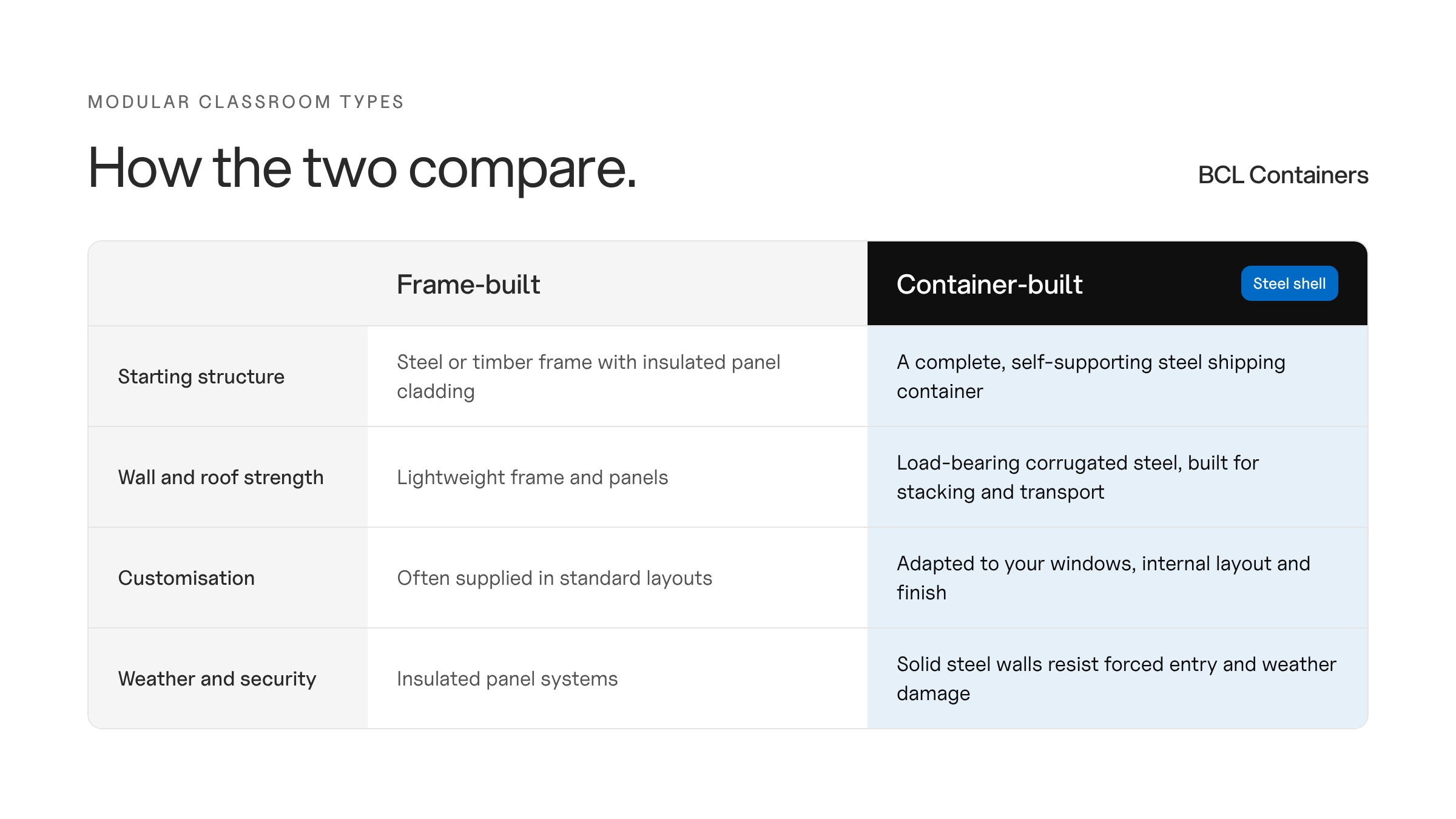
The two approaches start from different structures, and that shows up in several practical ways:
- Starting structure – Frame-built units begin as a steel or timber frame with insulated panel cladding. Container-built units begin as a complete, self-supporting steel shipping container.
- Wall and roof strength – A shipping container’s corrugated steel walls and roof are load-bearing and built to survive stacking and long-distance transport, giving it a structural head start a lightweight frame doesn’t have.
- Customisation – Frame-built units are often supplied in standard layouts. A container conversion can generally be adapted more heavily to a school’s specific window placement, internal layout and finish, since the steel shell is a stronger starting point to build from.
- Weatherproofing and security – Solid steel walls resist forced entry and weather damage better than insulated panel systems, which matters on sites at risk of vandalism or exposed to harsh conditions.
Build Quality and Lifespan
Frame-built modular classrooms are a proven, widely used option, but insulated panel cladding is generally the first part of the building to show wear, through damage, damp or general ageing. Container-built classrooms start from marine-grade steel designed to withstand years of transport and exposure, so many remain in good structural condition for decades with only basic upkeep such as repainting and seal checks.
That difference in starting material is the main reason a well maintained container classroom tends to outlast a frame-built equivalent, rather than any difference in how carefully either one is built.
Cost and Value Over Time
Frame-built and portable classrooms sometimes carry a lower purchase price than a container conversion, but that gap narrows once you account for maintenance and earlier replacement further down the line. For a full breakdown of what actually affects the price of a container classroom, and how buying compares with hiring, see our guide to container classroom costs.
Speed of Installation
Both approaches are fast to install compared with traditional construction, since most of the work happens away from your site. Frame-built units are sometimes slightly quicker to manufacture thanks to standardised designs, but container classrooms close that gap because the base structure already exists before fit-out even begins. For most schools, the practical difference in lead time between the two is smaller than the difference in what happens to the building over the years that follow.
Planning Permission and Foundations
Planning requirements and groundworks depend more on a unit’s size and your site than on whether it’s frame-built or container-built, though a container’s weight and shape can affect the foundation work needed compared with a lighter frame-built unit.
Which Type Suits Your School?
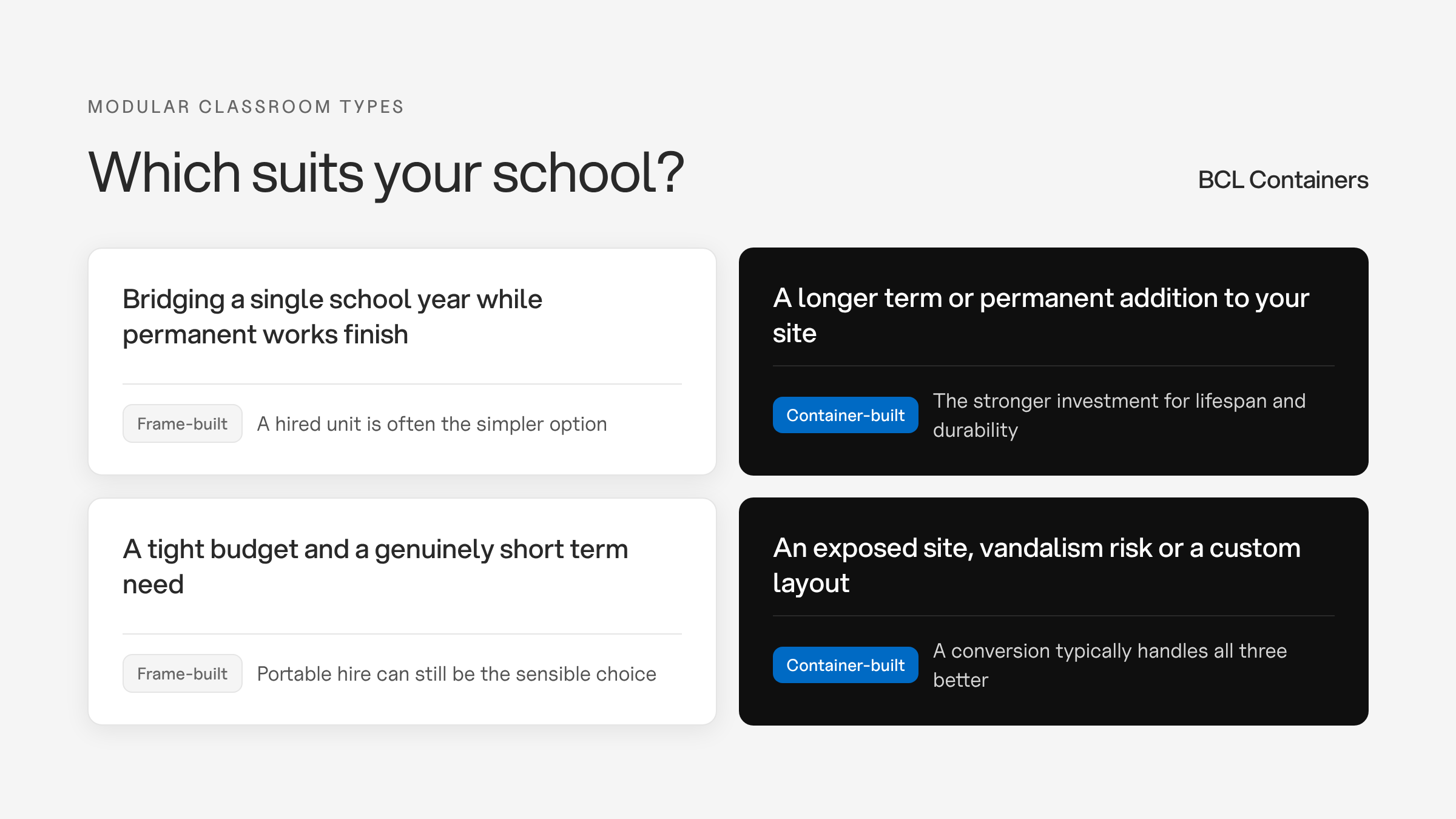
- Bridging a single school year while permanent works finish. A hired frame-built or portable unit is often the simpler short term option.
- A longer term or permanent addition to your site. A container-built classroom is generally the stronger investment, thanks to its lifespan and durability.
- An exposed site, a history of vandalism, or a layout that needs real customisation. A container conversion typically handles all three better than a standard frame-built unit.
- A tight budget and a genuinely short term need. A frame-built or portable hire option can still be the sensible choice.
Speak to our team about container classroom options for your school, and we’ll help you weigh that up against your budget, timeline and site.
Enquire About Shipping Container Classrooms
FAQs
What’s the difference between a modular classroom and a portable classroom?
‘Portable’ usually refers to smaller, single-room units designed to be easily relocated, often on a chassis with wheels or skids. ‘Modular’ is the broader term, covering any building manufactured off site as a complete unit, which includes portable cabins as well as larger frame-built or container-built classrooms. In practice, a portable classroom is a specific type of modular building rather than something completely separate from it.
Which lasts longer, a frame-built or container-built classroom?
A well maintained container-built classroom generally outlasts a frame-built one, because the steel shell resists weather and wear better than insulated panel cladding. Frame-built units can still last many years, but they’re more likely to need cladding or panel replacement earlier in their life.
Can a container classroom be moved to a different site later?
Yes. Because a container classroom is a complete, self-contained steel unit, it can be lifted and relocated to another site if your school’s needs change. That’s one of the reasons buying tends to make more sense than hiring for schools expecting to use the space for several years.
Does a container classroom need planning permission?
It depends on the size of the unit, your site and how long it will be in place, so it’s worth checking before you order. Learn more about temporary classroom planning permission.