
 Inspection and Testing

Converted shipping containers have become a serious housing option in the UK. They’re cheaper to build than a traditional home, faster to install, and far more customisable than most people expect. But before you commit, there are some practical questions worth getting straight.
This guide covers everything you need to know about container living, whether you're considering a full shipping container home or simply looking to add a self-contained shipping container guest house to your property.
Can you legally live in a shipping container in the UK?
It is entirely legal to live in a shipping container in the UK, provided the conversion meets the relevant building regulations and any required planning permissions are in place. A container home is treated no differently to any other residential dwelling in the eyes of the law.
To live legally in a container in the UK, you should consider planning permission needs if you’re going to be living in one long-term. You should also understand that converted containers must meet the same health, safety, and structural standards as traditional homes, including fire safety, insulation, ventilation, and electrical/water services.
Different types of converted container living

Container living isn't one-size-fits-all. The type of conversion you need depends entirely on how you intend to use it:
- Primary residence - A full shipping container home designed to replace a conventional house. Typically requires planning permission and full building regulations compliance.
- Container guest house or annex - A self-contained unit added to an existing property, usually used for family members, guests, or short-term letting. In many cases these can fall under permitted development rights, depending on size and location.
- Holiday or seasonal accommodation - Used as a rental unit or retreat on land you own. Planning requirements vary depending on frequency of occupation and whether it generates income.
Understanding which category applies to you shapes every subsequent decision around planning, cost, and build specification.
Do you need planning permission for a container home?
You might need planning permission for your container home depending on the size and type of your container home, and where it will be. For a full container home intended as a primary residence, planning permission is almost always required.
For supplementary structures such as a container guest house in your garden, you may qualify for Permitted Development rights.
Key restrictions apply:
- The structure must not exceed 4 metres in height (or 2.5m within 2 metres of a boundary)
- It cannot cover more than 50% of the garden area
- Permitted Development rights are removed in Conservation Areas, AONBs, and for listed buildings
Building regulations apply separately and do apply to habitable spaces regardless of whether planning was required. BCL's manufacturing process is designed with building regulations compliance in mind, and we can advise on what documentation your build will need.
Pros and cons of living in a shipping container
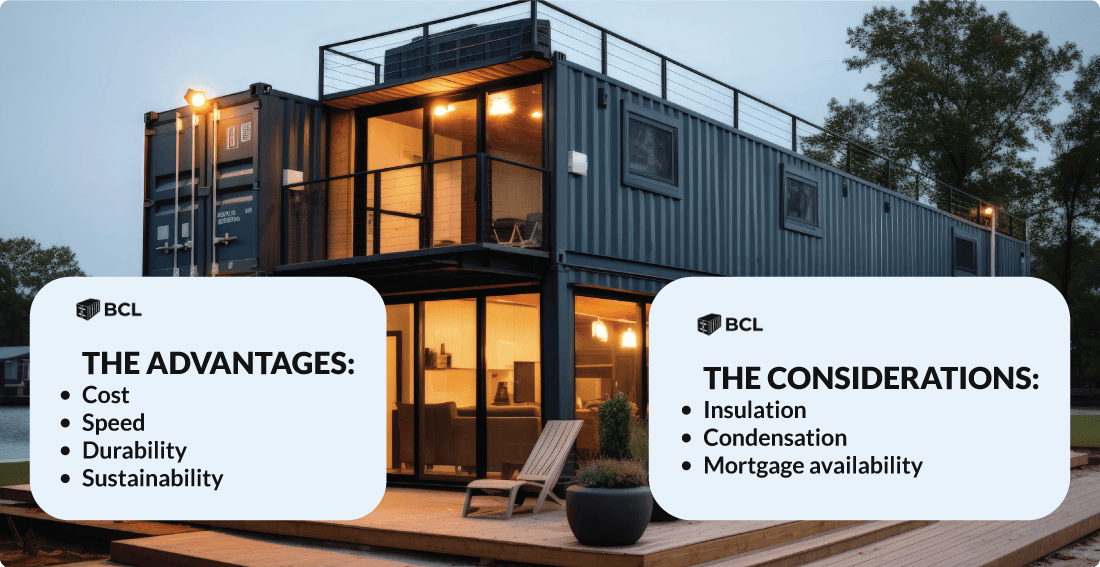
Living in a shipping container comes with a number of genuine advantages, but it’s also important to understand the potential drawbacks:
The advantages:
- Cost - Container homes can be 30-50% cheaper to build than equivalent conventional housing, leaving more budget for finishes and fittings.
- Speed - Because the main structure already exists, build times are significantly reduced. A well-managed container conversion can be ready to occupy in weeks rather than months.
- Durability - Shipping containers are engineered to withstand saltwater, high winds, and heavy loads. The structural integrity of a well-maintained container is exceptional.
- Sustainability - Repurposing a used container keeps thousands of kilograms of steel out of the scrap cycle and reduces demand for new construction materials.
The considerations:
- Insulation - Steel conducts heat and cold readily. Proper insulation is non-negotiable and getting it right adds to the build cost. However, if done well, a container home can be highly energy efficient.
- Condensation - Without adequate ventilation, moisture can build inside a steel structure. This problem is easily solved but needs to be factored in during the container design stage.
- Mortgage availability - Some high street lenders are cautious about non-standard construction. Specialist lenders do offer mortgages on container homes, but options are narrower than for brick-built properties.
Do you have to pay council tax on a container home?
Yes, in most cases. If a container home is your primary or sole residence and is permanently situated on land, it will be subject to council tax in the same way as any other dwelling. The local authority will assess the property and assign it a band based on its estimated value.
The exception is where a container is genuinely temporary and not fixed to a permanent foundation.
How long do shipping container homes last?
A well-maintained and properly converted shipping container can last 25 to 50 years or more as a habitable structure.
Longevity depends on the quality of the container conversion. Proper surface treatment, weatherproof coatings, and robust insulation all protect the steel from corrosion over time.
At BCL, we apply protective finishes through our in-house paint facility and build to standards suited to the UK climate.
Is a shipping container home right for you?
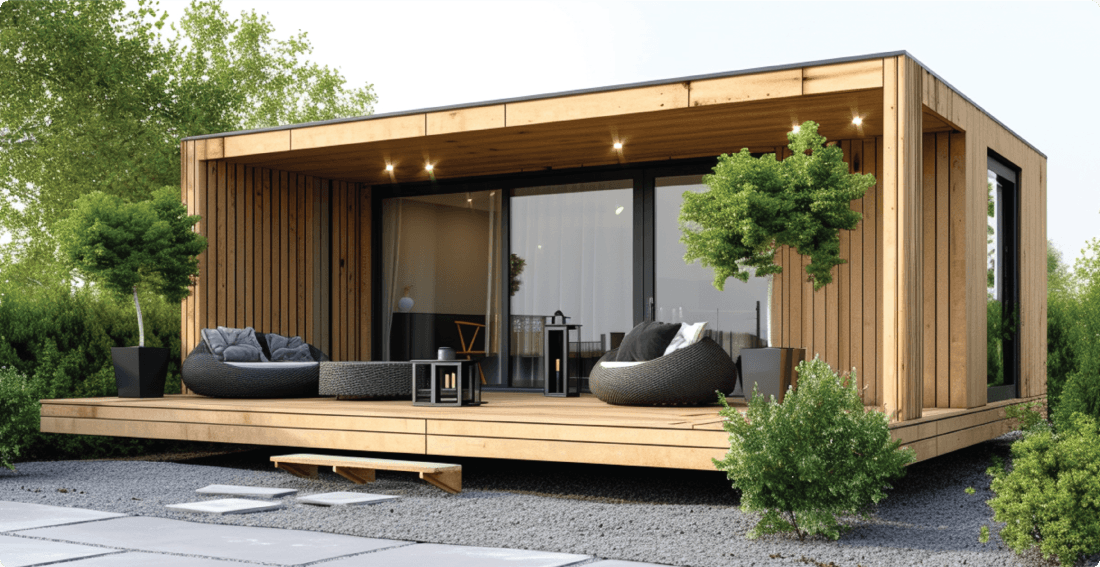
If you want to build a full permanent home on land you own, a bespoke shipping container home offers a faster, more cost-effective route than traditional construction with no compromise on comfort or longevity.
If you already own a property and want to add a self-contained space for guests, a dependent relative, or short-term rental income, a shipping container guest house is often the most practical route.
Either way, BCL Containers handles the full process from initial 3D design through to delivery and installation. Get in touch with our team to discuss your project and we'll help you find the right approach.